
How to Choose the Right Compressed Air Pipe Diameter?
If your compressed air system is underperforming — low tool pressure, high energy bills, or inconsistent output on the shop floor — the root cause is very often wrong pipe sizing, not a weak compressor. This air pipe sizing guide walks you through exactly how to size compressed air piping correctly, so your system runs efficiently from the compressor room to the last point of use.
Why Air Pipe Sizing Matters?
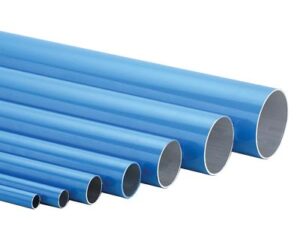 Every compressed air system loses some pressure as air travels from the compressor to the tools and machines using it. This is called pressure drop. When pipes are undersized, air has to squeeze through a narrow path, causing friction against the pipe walls. That friction eats into your pressure, forcing your compressor to work harder — and your electricity bill to climb — just to deliver the same performance at the point of use.
Oversized pipe isn’t the answer either. Larger diameter piping costs more to install and, beyond a point, adds no real efficiency benefit. The goal of any air pipe sizing guide is to help you land on the correct size — not too small, not needlessly large.
The Key Factors in Compressed Air Pipe Sizing
Proper compressed air pipe sizing comes down to four main variables:
1. Airflow Demand (CFM)
Your system’s maximum air consumption, measured in cubic feet per minute (CFM), is the starting point. Look at peak demand — the moments when multiple tools or machines draw air simultaneously — not just average usage. Undersizing for peak demand is one of the most common sizing mistakes.
2. Pipe Length and Layout
The farther air has to travel, the more pressure it loses along the way. When calculating total pipe length, don’t just measure the straight runs — every elbow, tee, valve, and fitting adds resistance equivalent to extra pipe length. A compressed air pipe diameter calculation that ignores fittings will underestimate real-world pressure drop.
3. Operating Pressure (PSI)
Air at higher pressure is denser, so it can move through a smaller pipe without the same pressure loss. Your system’s operating PSI directly influences what diameter you need.
4. Acceptable Pressure Drop
Industry practice generally recommends keeping pressure drop across the distribution network within a tight margin — the lower, the more efficient your system. If your calculated pressure drop exceeds this, it’s a clear sign you need a larger pipe diameter.
Compressed Air Pipe Sizing: Step-by-Step
- List all air-consuming equipment and their individual CFM requirements.
- Calculate peak simultaneous demand — not everything runs at once, but size for realistic worst-case load.
- Map your pipe run, including every bend, tee, and drop point.
- Add equivalent length for fittings to your straight-line pipe length.
- Reference a pipe sizing chart (matching CFM, pressure, and length to diameter) or use a compressed air pipe diameter calculator.
- Choose a diameter that keeps pressure drop within acceptable limits across your longest run.
- Plan for future expansion — if you expect to add machines or floor space, size slightly ahead rather than re-piping later.
Common Pipe Sizing Mistakes to Avoid
- Sizing only for average use, not peak demand — leads to pressure drops during high-usage bursts.
- Ignoring fittings and bends in length calculations.
- Using a single pipe size for the entire system instead of tapering from mains to branch lines.
- Not planning for future capacity, resulting in costly re-piping down the line.
- Choosing pipe material without considering corrosion and airflow resistance — this is where aluminium modular piping systems like Quickair have a real advantage over old-style galvanized steel, which rusts internally and progressively chokes airflow over time.
Why Pipe Layout Design Matters as Much as Size ?
Beyond diameter, how your piping is laid out affects performance just as much. A closed-loop ring main — where air can reach any point in the system from two directions — evens out pressure and handles intermittent heavy demand far better than a single dead-end branch line. For larger facilities, this loop design combined with correctly sized branch lines is considered best practice in compressed air distribution.
Aluminium Modular Piping: A Smarter Choice for Correct Sizing
Getting the sizing calculation right only pays off if the piping itself holds up. Aluminium modular air piping systems, like Quickair, are manufactured to consistent internal diameters with smooth bores that don’t corrode or narrow over time the way traditional steel pipe does. This means your sizing calculations stay accurate for the life of the system — no gradual pressure drop from internal rust buildup, and quick reconfiguration as your production layout changes.
Conclusion
Correct air pipe sizing is one of the highest-impact, lowest-cost improvements you can make to a compressed air system. Getting it right reduces energy waste, protects tool performance, and prevents expensive rework later. Whether you’re designing a new installation or auditing an existing one, working through CFM demand, pipe length, fittings, and target pressure drop systematically — using an air pipe sizing guide like this one — will get you to the right diameter every time.
Need help sizing compressed air piping for your facility? Quickair’s modular aluminium piping systems are designed for accurate, future-proof sizing with minimal pressure loss. Get in touch with our team to discuss your layout.